Opinions about chatbots are free; the numbers cost research. We pulled the most credible 2026 statistics from research firms and industry surveys to answer the question behind the chatbot vs live chat debate: what does the data actually say about bots, humans, and where support is heading?
Every figure below links to its source. No recycled, unsourced numbers.
The Market Has Voted
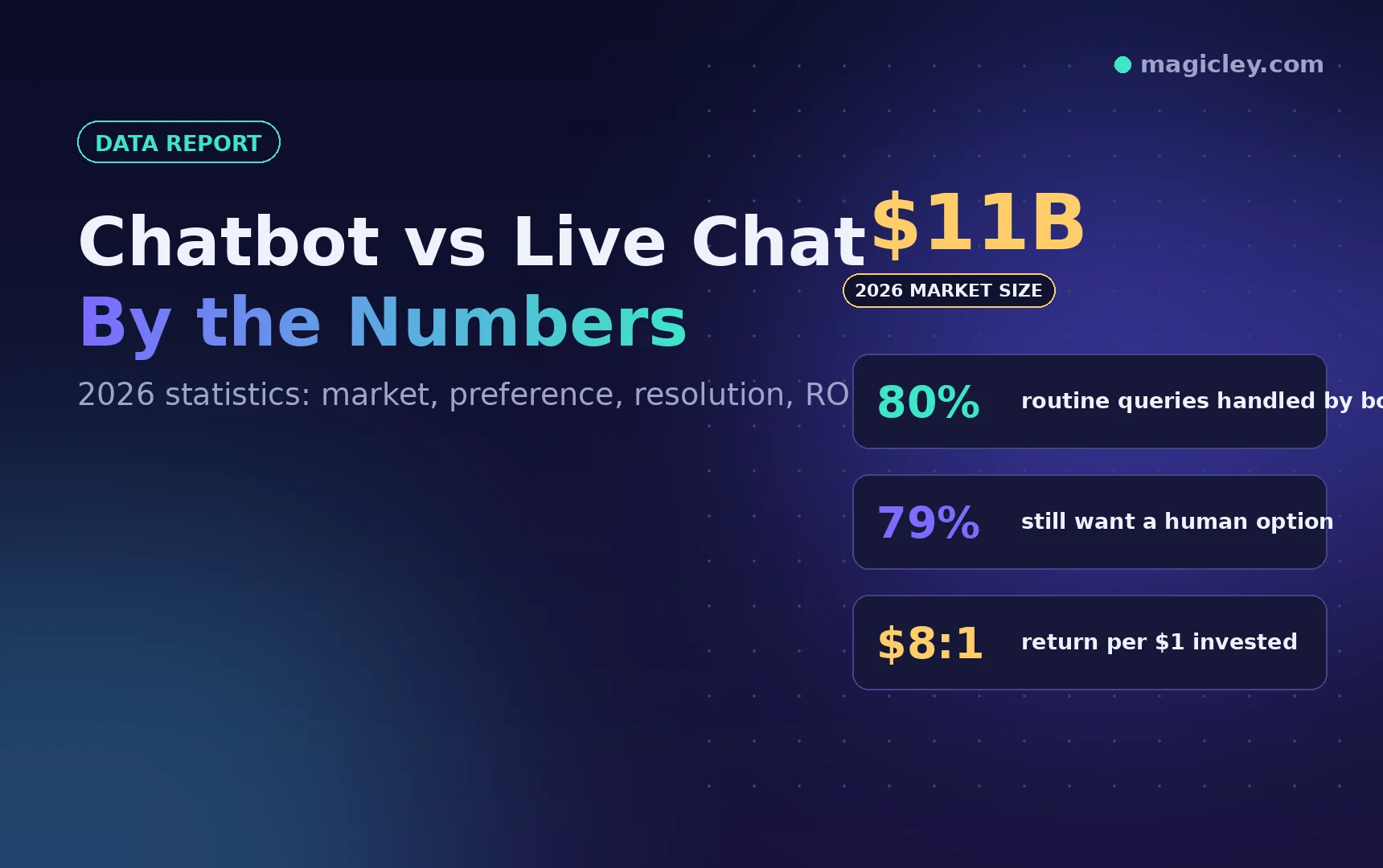
-The global chatbot market reached roughly $11–11.8 billion in 2026, with Grand View Research projecting over $41 billion by 2033 (Brilo AI roundup of Grand View data). Nobody spends that on a fad.
-Nearly 987 million people worldwide now use AI chatbots (DemandSage).
-AI chatbots top the list of channels companies plan to increase investment in for 2026, cited by 38% in HubSpot's survey (via Botpress).
-Gartner projects 25% of organizations will use chatbots as their primary customer service channel by 2027 (via Chatbot.com).
What Bots Actually Resolve
-Salesforce reports about 30% of service cases are now resolved by AI, projecting 50% by 2027 (source).
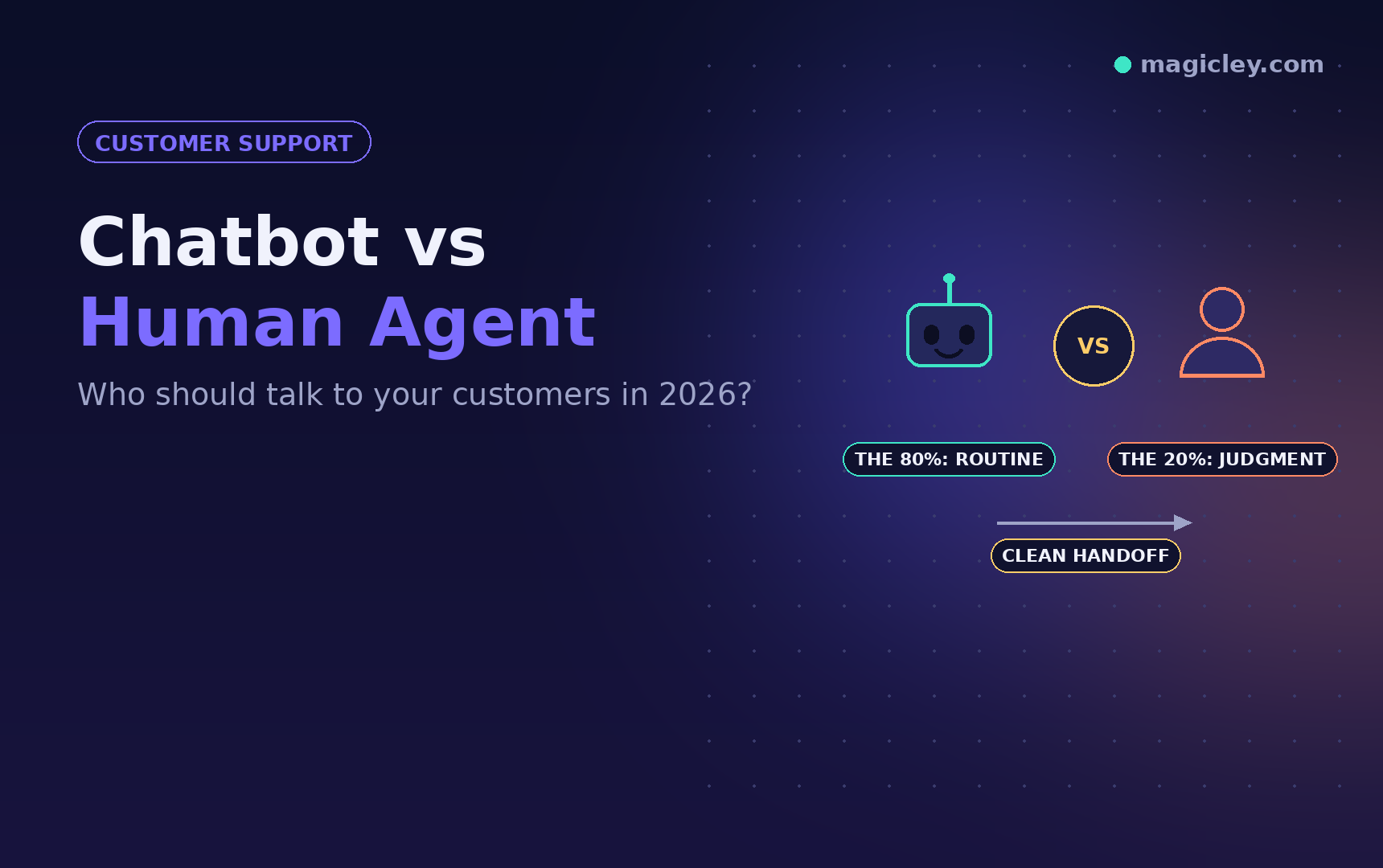
-Chatbots handle up to 80% of routine questions without human help (Marketing LTB) — the same 80/20 split we've observed and built our support chatbot playbook around.
-75% of CX leaders expect AI to soon resolve 80% of interactions without humans (Zendesk, via Brilo).
What Customers Actually Prefer (Both Sides)
Here's where honest reporting matters, because the data supports both camps:
-79% of Americans still prefer having a human option available (SurveyMonkey 2026, via Brilo). The human exit hatch isn't optional.
-Yet 82% of consumers prefer a chatbot over waiting on hold (JoyzAI) , speed beats species when the question is simple.
-27% of customers can't tell whether they talked to a bot or a human (PwC, via DemandSage).
-44% of e-commerce shoppers prefer chatbots for product questions (JoyzAI).
Read together: customers want bot speed for simple things and guaranteed human access for hard things, the hybrid conclusion, straight from the data.
The Money Numbers
-Businesses report roughly $8 in returns per $1 invested in chatbots (Azumo analysis).
-57% of companies say chatbots deliver significant ROI within the first year (Marketing LTB).
-A 30% reduction in support agent workload is cited as a key market driver (SeoProfy) consistent with agents getting more productive when bots take triage.
What the Numbers Mean for Your Business
Three conclusions fall out of this data:
- Deploying a bot is no longer early adoption, it's catching up. When a quarter of companies are heading to bot-primary support, the differentiator isn't having one; it's having a well-trained one.
- The human option is a retention feature. The 79% number is your design constraint: always visible path to a person.
- The ROI case is now boring. $8-to-$1 returns and first-year payback moved this from experiment to line item.
Bottom Line
The statistics don't crown a winner between chatbots and live chat , they describe a division of labor that customers have already chosen. Bots for volume and speed, humans on call for judgment. The full breakdown of how to implement that split is in our chatbot vs live chat comparison or skip ahead and build the bot side free.
Statistics compiled July 2026 from linked sources; figures are the publishers' , see each source for methodology.