"Should a bot or a person answer this?" is the single most consequential customer-service decision you'll make this year, and most businesses get it wrong in one of two directions. Either they automate everything and trap frustrated customers in loops, or they automate nothing and pay skilled humans to recite the return policy forty times a day.
Having set up both sides of this equation for years, here's the honest division of labor.
What Each One Is Actually Best At
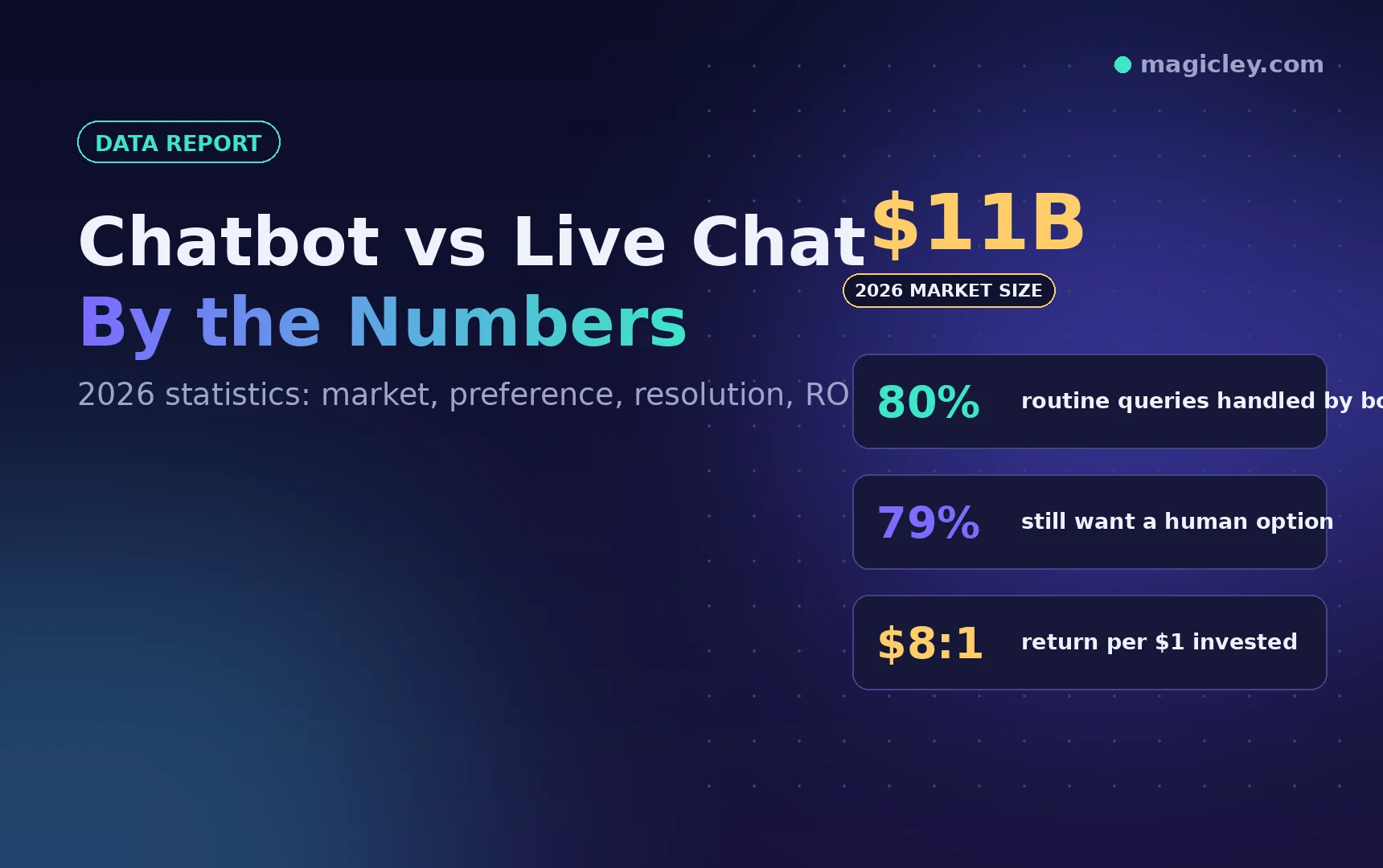
Human agents win at: empathy and de-escalation, judgment calls outside policy, negotiation, reading between the lines, and building relationships on high-value accounts. Notably, SurveyMonkey's 2026 research found 79% of Americans still want a human option available, people tolerate bots much better when they know an exit exists.
Chatbots win at: speed (instant, always), availability (3am on a holiday), consistency (the same correct answer every time), volume (unlimited simultaneous conversations), and languages. Industry data consistently shows bots resolving the large majority of routine questions without human help, which is why Gartner projects a quarter of organizations will run chatbots as their primary service channel by 2027.
The Decision Rule That Actually Works
Skip the philosophy and route by query type:
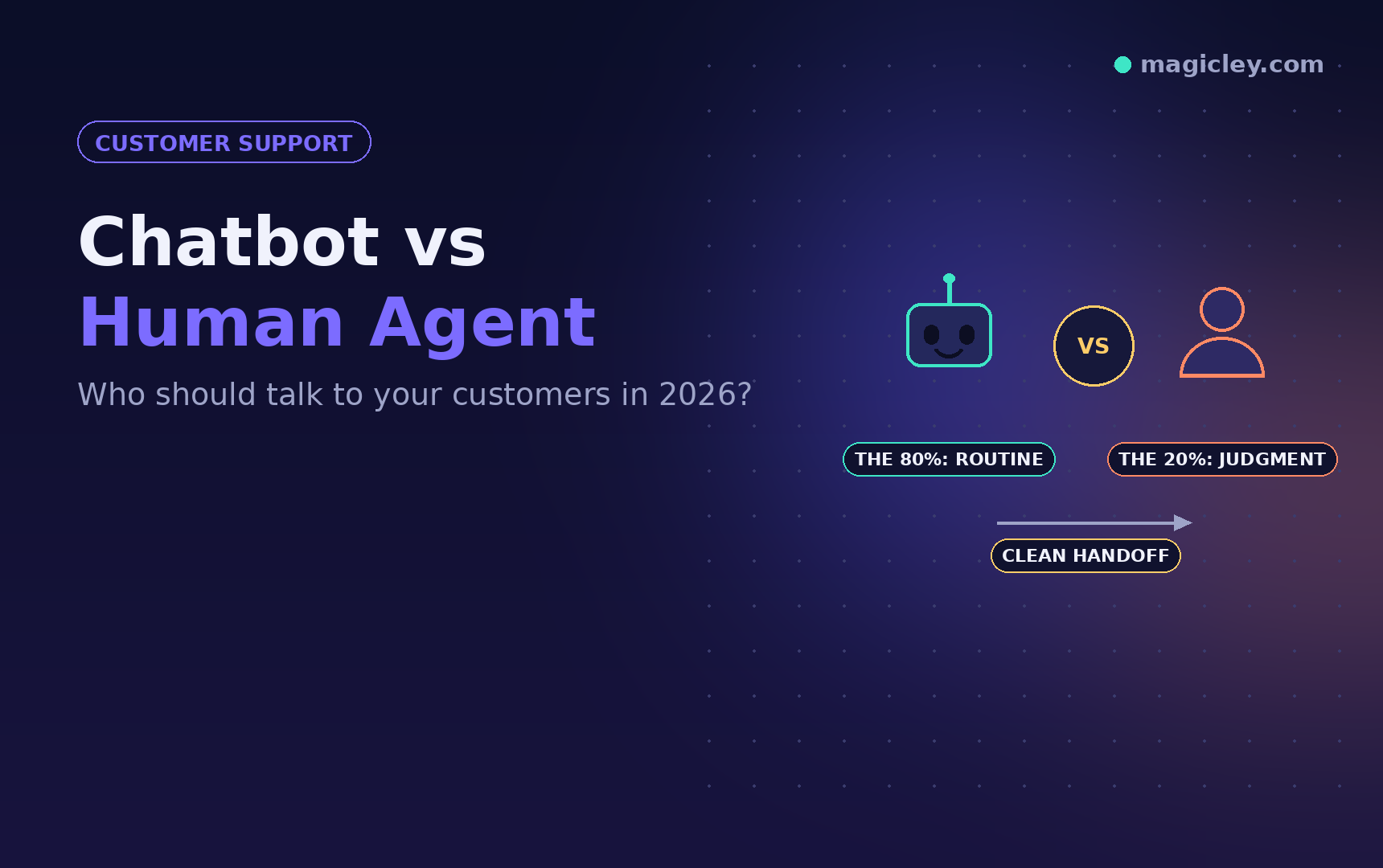
-Send to the bot: order status, pricing, how-do-I questions, account basics, FAQ anything, the repetitive ~80% of your queue.
-Send to the human: complaints, refunds beyond policy, emotionally loaded situations, high-value accounts, anything where the customer explicitly asks for a person.
-The handoff is the whole game. The bot should escalate on three triggers : complexity, emotion, or request — and pass the full conversation with it so nobody repeats themselves. We covered handoff design in depth in our complete chatbot vs live chat comparison.
The Part Nobody Says Out Loud
This isn't a jobs-versus-robots story. Every implementation I've watched succeed made the human agents' work better: smaller queues, no repetitive drudgery, more time per meaningful conversation. The bots absorb the volume; the humans keep the judgment. Companies report support teams getting measurably more productive when a well-trained bot handles triage not smaller teams, better-deployed ones.
FAQ
Will a chatbot annoy my customers? Only if it pretends to be human, can't escalate, or handles questions beyond its training. A bot that answers instantly and hands off gracefully consistently outperforms human agents. (PwC found 27% of customers can't even tell which one they talked to.)
Is a human agent worth the cost for a small business? For the complex 20% of queries, absolutely, that's where trust is built. The point is not paying human rates for the repetitive 80%. A bot trained on your own content covers that for a flat fee.
Can I start with just a chatbot? Yes, with one rule: always offer a path to a person, even if that path is "leave your email and we'll reply tomorrow." An exit hatch is the difference between helpful automation and a trap.
Bottom Line
Chatbot vs human agent is a false fight, it's a shift schedule. Bots take the volume, humans take the nuance, and the handoff makes or breaks the experience. Build the bot half free, and let your humans do the work only humans can.