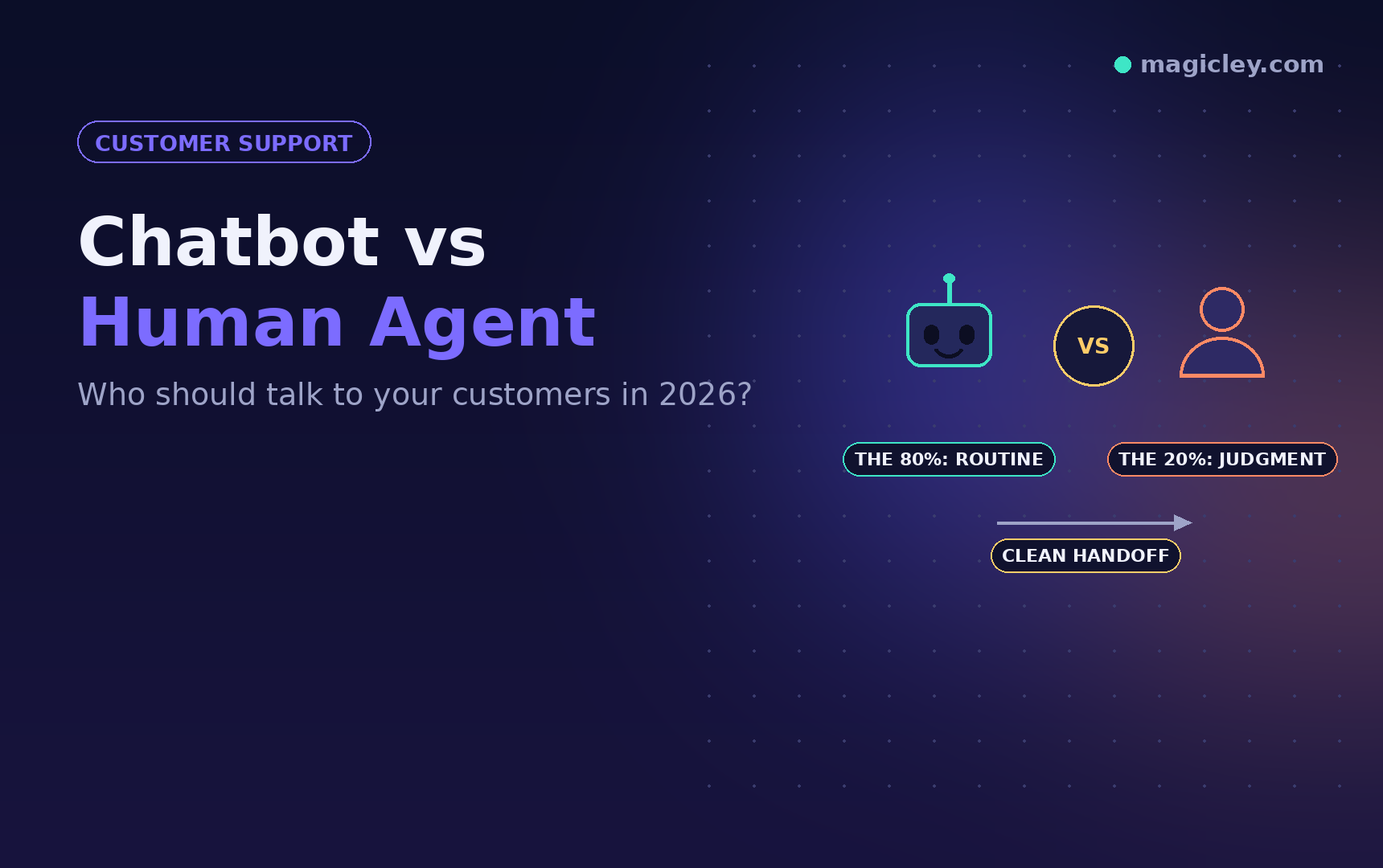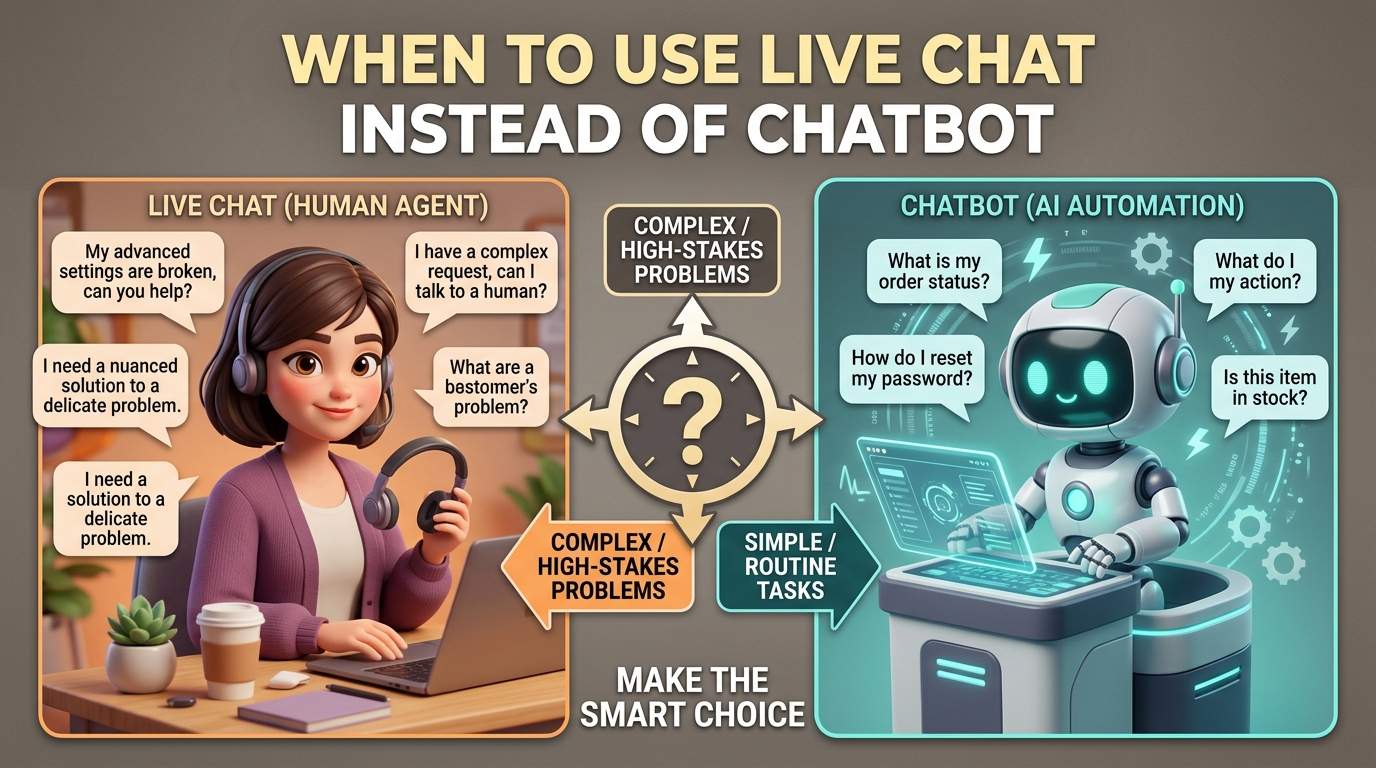
I build chatbots for a living, so believe me when I say this: there are moments when deploying one is the wrong call. The businesses that win with AI aren't the ones that automate the most, they're the ones that know exactly where automation stops.
Here are the seven situations where a human on live chat beats any bot, no matter how well-trained.
1. The Customer Is Angry
Escalated emotion is a human job, full stop. An upset customer wants to feel heard, and acknowledgment from a machine reads as an insult. Route on emotional signals — caps, exclamation marks, words like "ridiculous" or "cancel" — straight to a person. Fast.
2. The Refund Is Outside Policy
Bots follow rules; edge cases need judgment. When the answer is "technically no, but this customer has been with us five years," you want a human empowered to make the call. Rule-bending is a feature of human support, not a bug.
3. The Sale Is High-Ticket
For a $30 purchase, instant bot answers win the conversion. For a $3,000 one, buyers want a knowledgeable human who can read hesitation and answer the question behind the question. Interestingly, the data says consumers prefer bots for simple pre-purchase questions — product specs, shipping — so the winning pattern is bot for the facts, human for the close.
4. The Problem Has Never Happened Before
Bots answer from training; novel problems have no training data. A genuinely weird bug, a shipping catastrophe, an integration nobody anticipated — that's human territory. A good bot's job here is recognizing "I don't know this" quickly and handing off with full context.
5. The Conversation Is Sensitive
Billing disputes, account security, health-adjacent questions, anything involving personal hardship — these deserve human discretion. (Regulators agree: new rules are emerging specifically requiring human protections around health and financial conversations in chatbot interactions.)
6. The Customer Asked for a Human
The fastest way to destroy trust is a bot that won't let go. When someone says "agent," "human," or "real person," the correct response is one message: connecting you now. Most consumers want that exit to exist — honoring it instantly is what makes them comfortable using the bot at all.
7. The Account Is Strategic
Your top accounts deserve a name and a face. Bots can handle their routine queries too, but relationship moments — renewals, expansions, complaints — belong to a human who knows their history.
The Design That Gets You Both
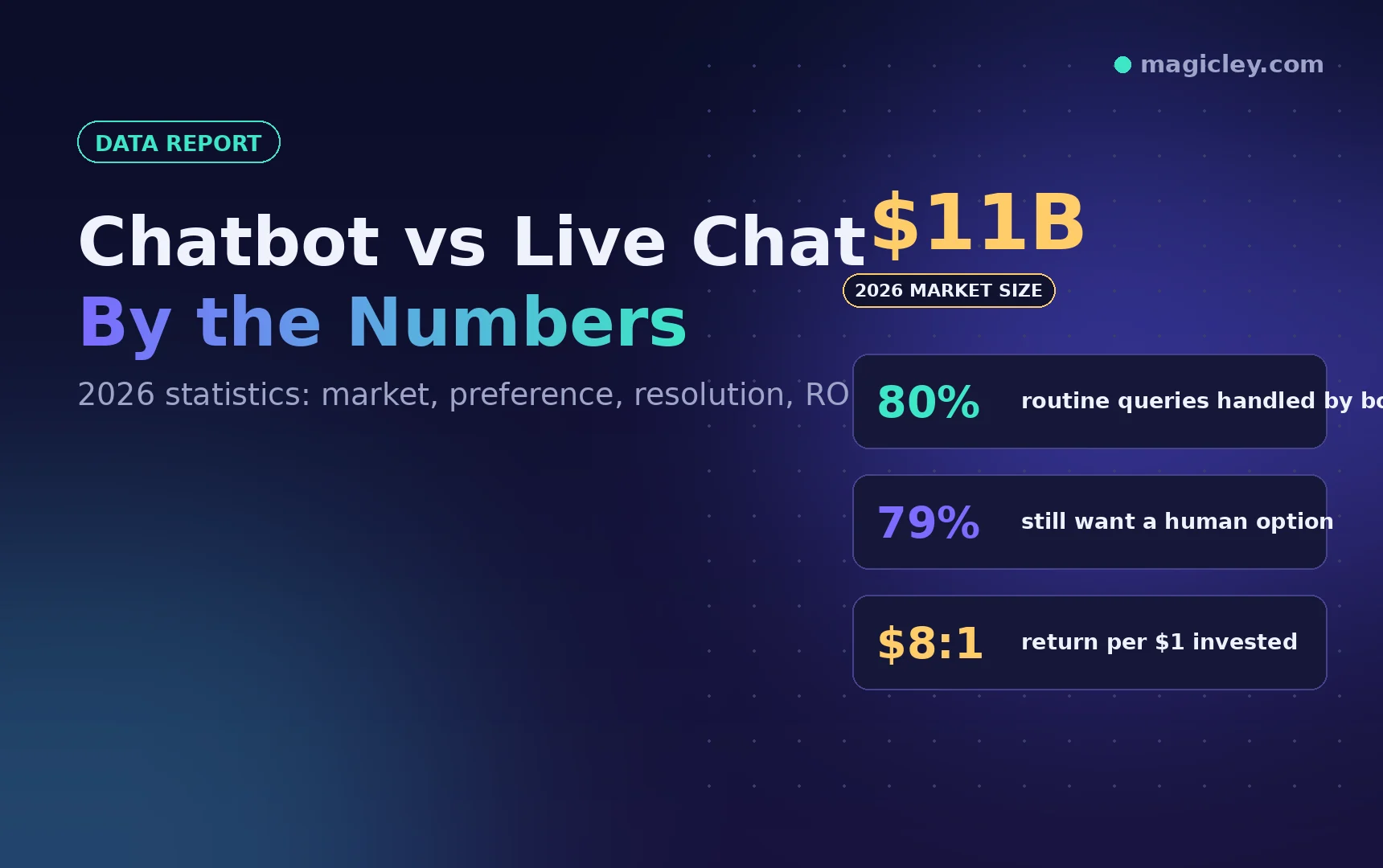
Notice what all seven have in common: they're the minority of your queue. The repetitive majority — order status, FAQs, how-do-Is — still belongs to the bot, which is exactly why the hybrid model wins the broader chatbot vs live chat debate. The implementation pattern: bot first, with escalation triggers for emotion, novelty, sensitivity, value, and explicit request. We walk through the trigger setup in our support chatbot guide, and if you run multiple specialized bots, the routing rules matter even more.
Bottom Line
Use live chat when the conversation needs judgment, emotion, or discretion and a bot for everything else, so your humans are actually available when those seven moments arrive. Set up the everything-else half free; your live chat queue will thank you.