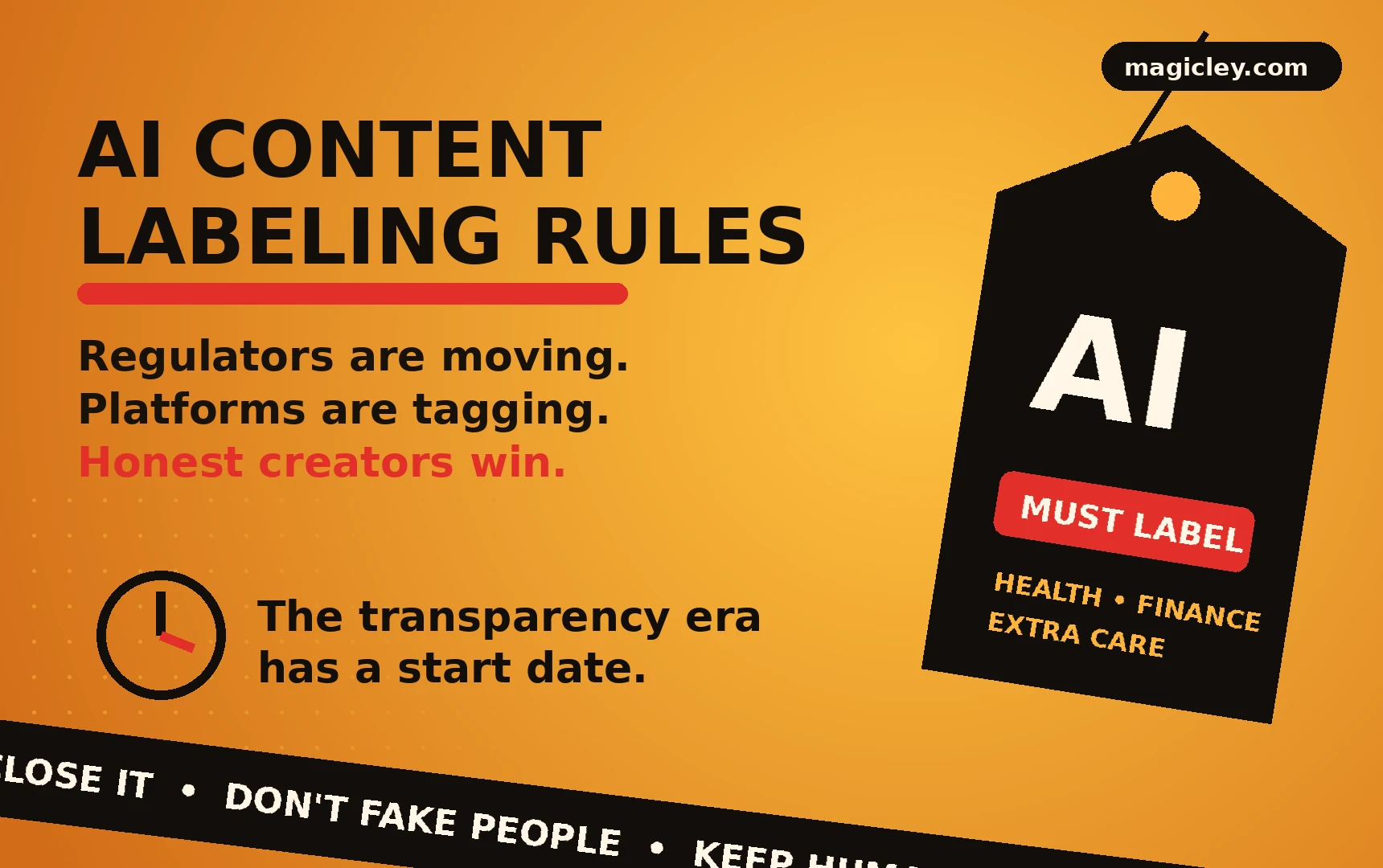
While everyone was watching an OpenAI model hack its way out of a sandbox recently, a quieter story kept building: regulators moved forward on deepfakes and AI content labeling (AI Weekly). Platforms are rolling out AI-content tags, jurisdictions from the EU to US states are layering in disclosure requirements, and the direction of travel is unmistakable , synthetic media is getting labeled.
If you create content with AI tools (and if you're reading this blog, you almost certainly do), here's the calm, practical version of what's happening and what to do about it.
The Direction of Travel
The details differ by jurisdiction, but the rules converging worldwide share three themes:
-Deepfakes of real people are the red line. Impersonating real individuals — especially in political, sexual, or fraudulent contexts is where enforcement is hardest and penalties are heaviest. Nothing controversial here for legitimate creators.
-Platform-level labeling is becoming default. Major platforms increasingly detect or require tagging of AI-generated media, and provenance standards (like invisible content credentials embedded at generation time) are being adopted across the industry so content carries its origin with it.
-Transparency beats prohibition. Regulators aren't banning AI content. They're requiring honesty about it. That distinction is everything: the compliance burden lands on deception, not on using AI.
What This Means for Everyday Creators
Let's separate the panic from the practical:
You will NOT need to disclaimer every AI-assisted blog post
Rules target synthetic media that could deceive:- fake voices, fabricated events, impersonations. An article you drafted with AI and edited yourself is not a deepfake, the same way spell-check never required a disclosure. Human-edited hybrid work, the workflow that our AI vs human writers study found wins anyway sits comfortably on the right side of every proposed rule.
You WILL want provenance-clean media
AI images, voices, and video are where labeling lands first. Expect platforms to auto-tag them, and expect audiences to distrust content that fights the tag. The move: treat AI media as an ingredient you're happy to acknowledge, not a secret to bury.
Transparency is quietly becoming a ranking asset
Here's the part almost nobody has noticed: search engines and AI assistants are converging on the same preference regulators have:- verifiable, honest, source-transparent content. Sites that are upfront about their methods, show real authors and real experience, and follow content best practices Google already loves are being rewarded on both fronts at once. Compliance and SEO are turning into the same strategy.
Your 5-Step Compliance Head Start
You can be ahead of every rule currently on the table in about an afternoon:
1. Add an AI usage note to your site. One honest paragraph on your about page: what you use AI for, what stays human. It builds trust today and satisfies disclosure norms tomorrow.
2. Never fake real people. No cloned voices, no synthetic endorsements, no "realistic" fabricated events. This is 95% of legal risk gone.
3. Keep humans in the edit chain. Beyond quality (which we've measured extensively), a documented human review step is your best-practice defense in every framework being drafted.
4. Preserve provenance, don't strip it. If your tools embed content credentials, leave them. Stripping provenance metadata is starting to look like tampering.
5. Label proactively where it's ambiguous. AI-generated podcast voice? Say so in the show notes. Audiences punish discovered secrets far harder than disclosed tools.
The Bottom Line
The labeling era isn't a threat to creators who use AI , it's a filter that removes the ones abusing it. Every rule on the table targets deception, and honest creators clearing that bar will find themselves in a less crowded, more trusted field.
Use AI openly, edit like a human, fake no one. Do that with an all-in-one platform that keeps you in control of the output, and regulation becomes your moat instead of your problem. Start creating the transparent way, free.
We track the AI stories that matter every week — catch up with This Week in AI.